There is a quiet revolution happening in UK hospitality. It is not happening in dining rooms or at front-of-house. It is happening inside commercial kitchens that most customers will never see, producing meals that get handed to a rider and delivered to someone's front door within the hour. Dark kitchens have become one of the smartest tools in a food brand's growth playbook and more operators are waking up to why.
£14.3bn UK food delivery market size in 2025, growing at 3.1% year on year
Testing a New City Without Betting the Business on It
Opening a permanent restaurant in a new city is a significant financial commitment. You are signing leases, hiring teams, fitting out premises and hoping the local appetite for your brand is strong enough to sustain it. Dark kitchens flip that equation entirely.
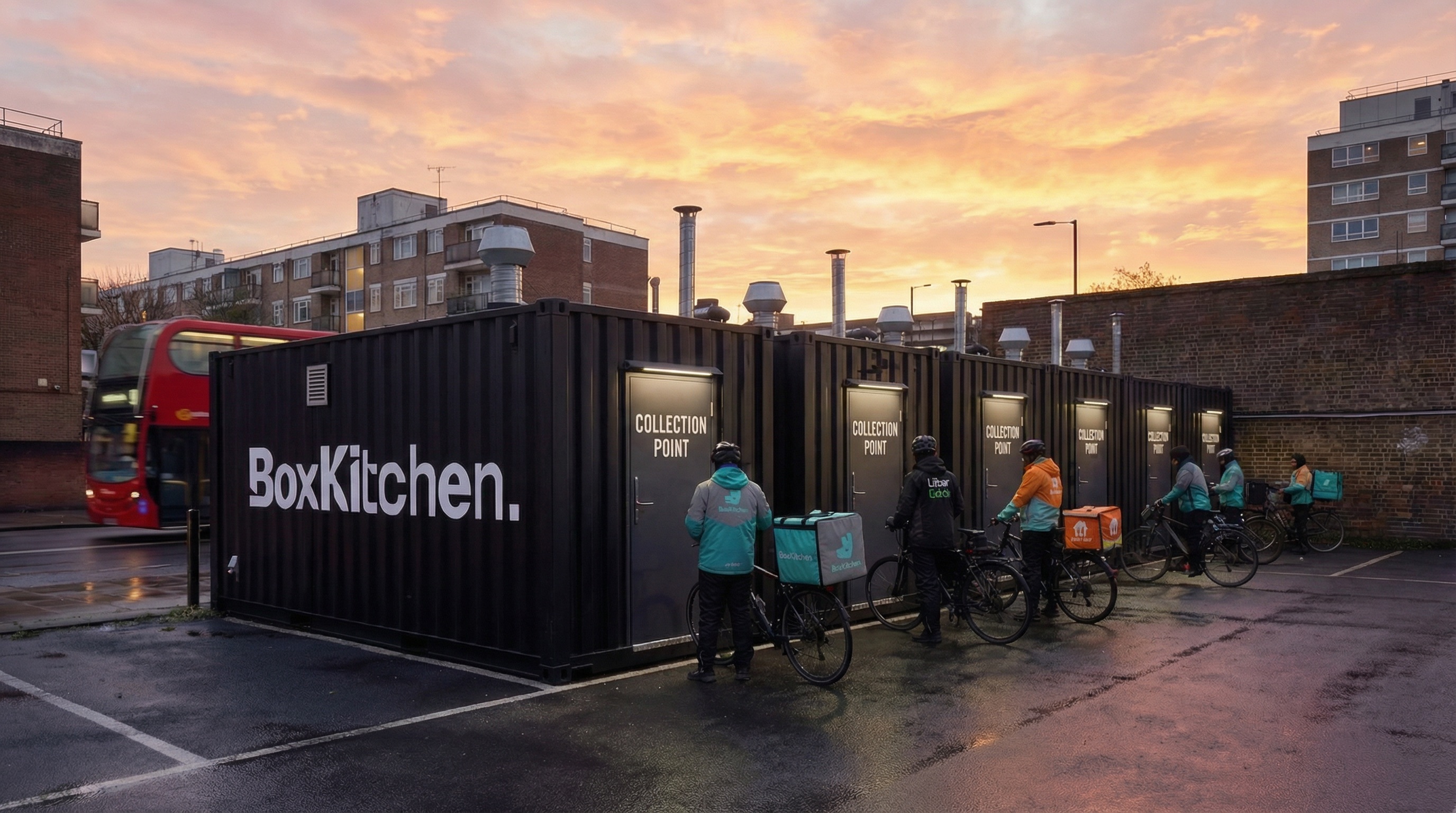
A containerised dark kitchen unit can be deployed in weeks, not months. You test the market through Deliveroo, Uber Eats, Just Eat or Hungry Panda, run the numbers for a quarter, and make an informed decision based on real order data rather than gut instinct. If Manchester works, you scale. If the appetite is not there, you move on without a costly lease dragging behind you.
This is exactly how smart brands are approaching regional expansion right now. The dark kitchen becomes a live market test with a paying customer base, not a focus group.
"The dark kitchen becomes a live market test with a paying customer base, not a focus group."
A Real Revenue Stream, Not Just a Test
What makes the model so compelling is that the testing phase generates actual income. Platforms like Deliveroo and Uber Eats give established brands immediate access to an audience of millions. In 2024, Uber Eats overtook Just Eat to account for over half of all delivery occasions in the UK. That reach, combined with the low overhead of a delivery-only operation, can generate meaningful margin from day one.
The maths are worth thinking through. A dark kitchen eliminates front-of-house costs entirely: no floor staff, no tables to turn, no walk-in trade to manage. Your outgoings are the unit, utilities, kitchen crew and platform commission. For brands with an efficient menu and strong delivery reviews, a single dark kitchen unit operating across two or three platforms can generate consistent weekly revenue that covers its costs and contributes real profit.
7.6%CAGR for the global dark kitchen market through to 2033, from a base of $110bn in 2025
Multiple Brands, One Kitchen
One of the less talked-about advantages of dark kitchens is the ability to run multiple virtual brands from a single unit. A kitchen that produces burgers on Deliveroo can run a separate wings concept on Uber Eats and a loaded fries brand on Just Eat, all simultaneously, from the same four walls. Some operators are running five to ten distinct virtual brands from a single facility, maximising utilisation and spreading platform risk.
For a business with an existing kitchen and a team capable of adapting to different menus, this is close to found revenue. The infrastructure is already paid for. The additional throughput simply needs demand to match it and the platforms provide the audience.
Plug-and-Play Infrastructure Changes Everything
The barrier that used to hold brands back from dark kitchen expansion was the complexity of setting up compliant commercial kitchen space in a new location. Planning permissions, fit-out timelines and upfront costs made it slow and expensive. Containerised units have changed that completely.
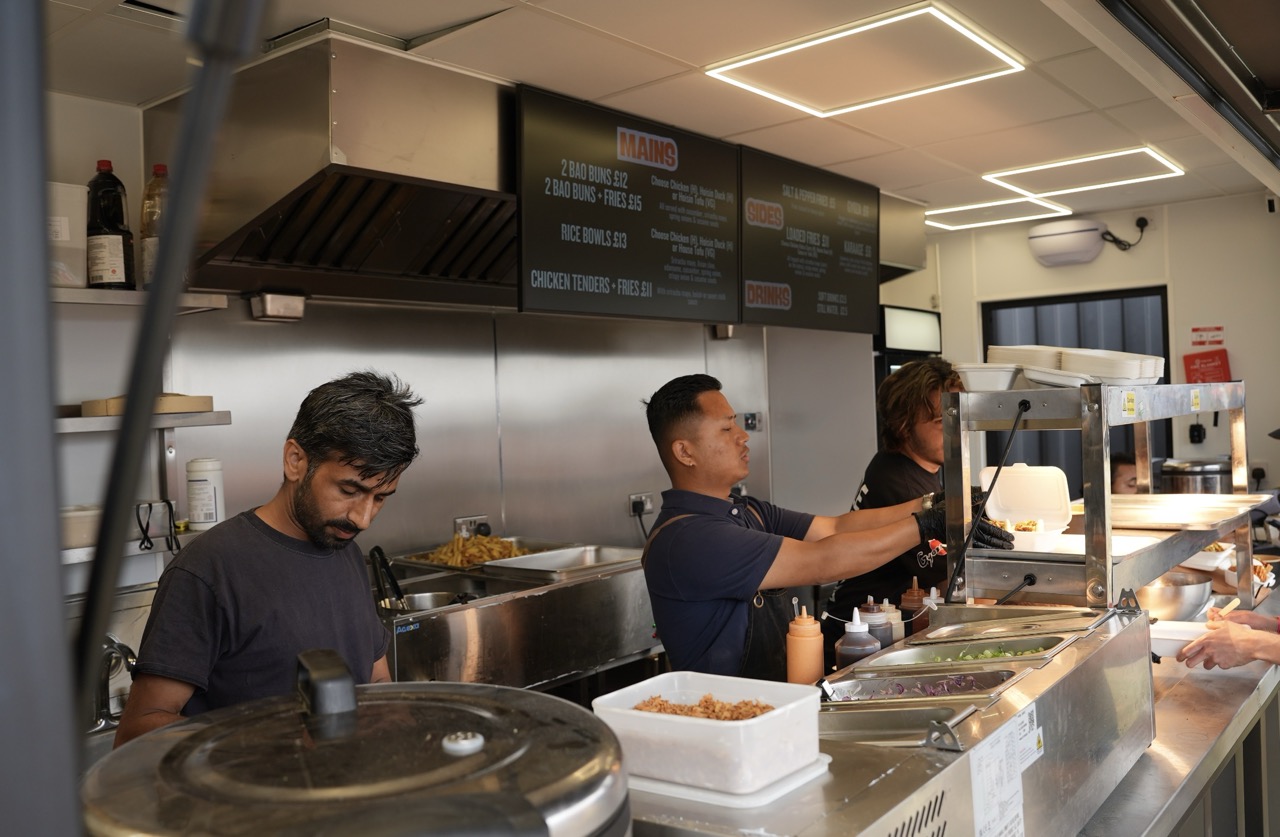
A BoxKitchen dark kitchen unit arrives fully equipped and ready to trade. Stainless steel benches, extraction canopy, refrigeration, LED lighting, hand wash basin and a delivery driver dispatch area are all built in. There is no lengthy fit-out and no guesswork around compliance. You connect power, you pass your inspection, and you trade.
The rental model also means capital expenditure is not a barrier. Units are available from £1,250 per week, making it realistic for growing brands to deploy in a new city, generate revenue, prove the market and then decide whether a permanent presence makes commercial sense.
The Window is Open, For Now
Dark kitchens are not a niche strategy anymore. Major food groups, franchises and independent brands are all moving in this direction. The brands that get into new markets first build the review history, the repeat customer base and the platform rankings that are harder to dislodge later.
If your brand has proven itself in one city, a dark kitchen is the most efficient way to find out if it can do the same in the next one.
.svg)
.svg)