Ask most event operators what keeps them up at night in December and the answer is rarely footfall. It's whether the catering will survive the weather.
The UK events industry closed 2025 worth £68.7 billion, up 11.4% year on year and now generating around 85 million attendances annually across the country (UKEVENTS Report 2025). A huge share of that growth happens in the coldest, wettest, most logistically demanding months of the year. Christmas markets, festive fan zones, New Year activations and corporate parties are no longer a quiet tail-end to the events calendar. They're one of its biggest single opportunities, and the operators who get the infrastructure right are the ones cashing in.
The problem is that most catering setups still aren't built for it.
The winter events market is bigger than most people plan for
Look past the tinsel and the numbers are hard to ignore. Manchester's Christmas markets alone pull in more than 9 million visitors a year, and Hyde Park's Winter Wonderland attracts up to 3 million. Bath's 18-day market drew 444,000 visitors in 2024, generating £41.5 million in business turnover and a £60.4 million wider economic boost for the city, with average visitor spend climbing from under £27 a day to over £31 in a single year. Edinburgh's winter festival season delivers an estimated £198 million in total economic impact across a seven-week run.
On the corporate side, the office Christmas party has become a serious line item rather than an afterthought. 77% of UK businesses now rank it as the most important event on their calendar, and average per-head spend has climbed from £160 in 2022 to £172 in 2024, a 7.7% annual increase, with 61% of companies now spending over £150 per head. That's real budget looking for a food and drink experience worth turning up for, not a folding table under a gazebo.
Add in the wider food-to-go market, forecast to hit £24.9 billion in 2026 with average spend per visit up 8.5% year on year, and the picture is clear: demand for quality catering at winter events isn't just holding up, it's accelerating. The operators capturing that spend are the ones whose infrastructure can actually perform in November, December and January conditions.
Why standard catering setups become the weak point in winter
Marquees, gazebos and open-fronted stalls are fine for a summer festival. They're a liability in a UK winter. Wind loading, standing water, condensation and failing generators are the recurring headaches event operators report every festive season, and every one of them lands directly on the catering and bar offer, the part of the event visitors interact with most and remember longest.
A few specific pressure points show up every year:
- Power reliability. Heaters, lighting, hot-hold equipment and card machines all draw more current in the cold, right when generators are already working harder. A trip or failure mid-service doesn't just lose sales, it's a food safety issue.
- Weatherproofing. Canvas and pop-up structures aren't designed to keep staff and stock dry and warm through a six-week market run, let alone hold up under storm-force winds like the ones that closed Bath's market for a peak trading day in 2024.
- Hygiene standards under pressure. Extended winter market runs mean equipment gets more use in worse conditions, and EHO standards don't relax because it's cold outside.
- Setup speed. Short load-in windows and hard breakdown deadlines are standard for city-centre winter markets and stadium fan zones. Structures that take days to rig eat straight into trading time.
None of this is solved by a bigger gazebo. It's solved by using infrastructure that was never designed to be fair-weather in the first place.
What a shipping container kitchen or bar actually solves
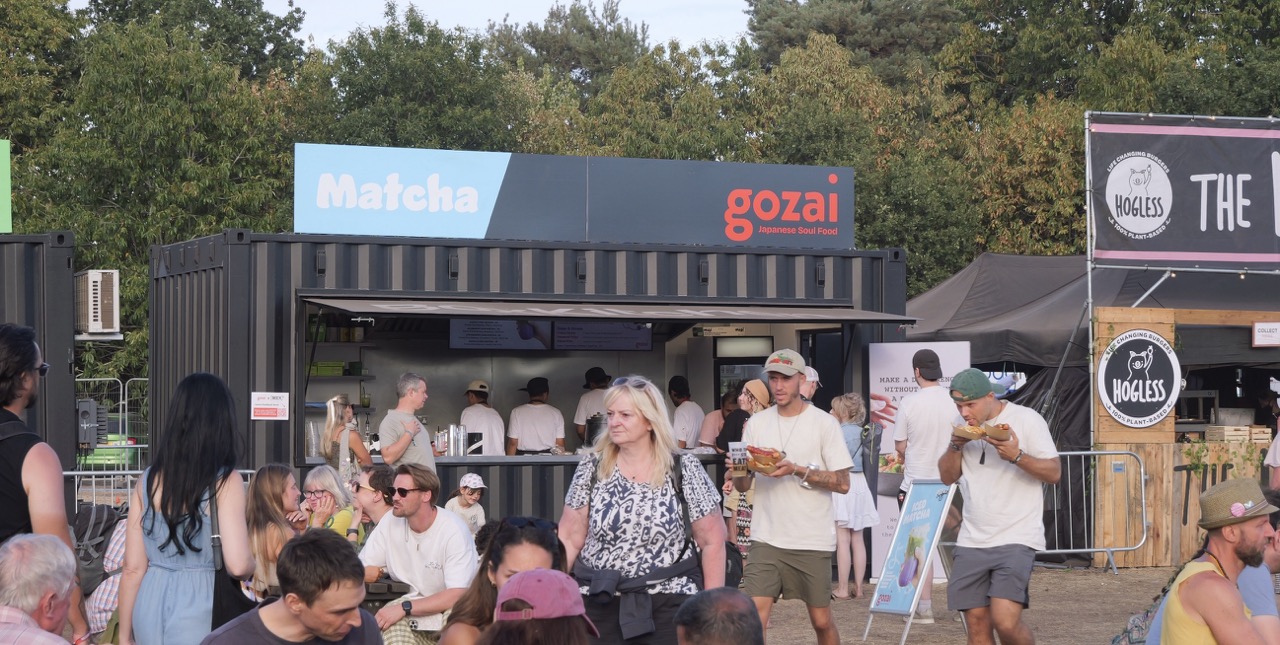
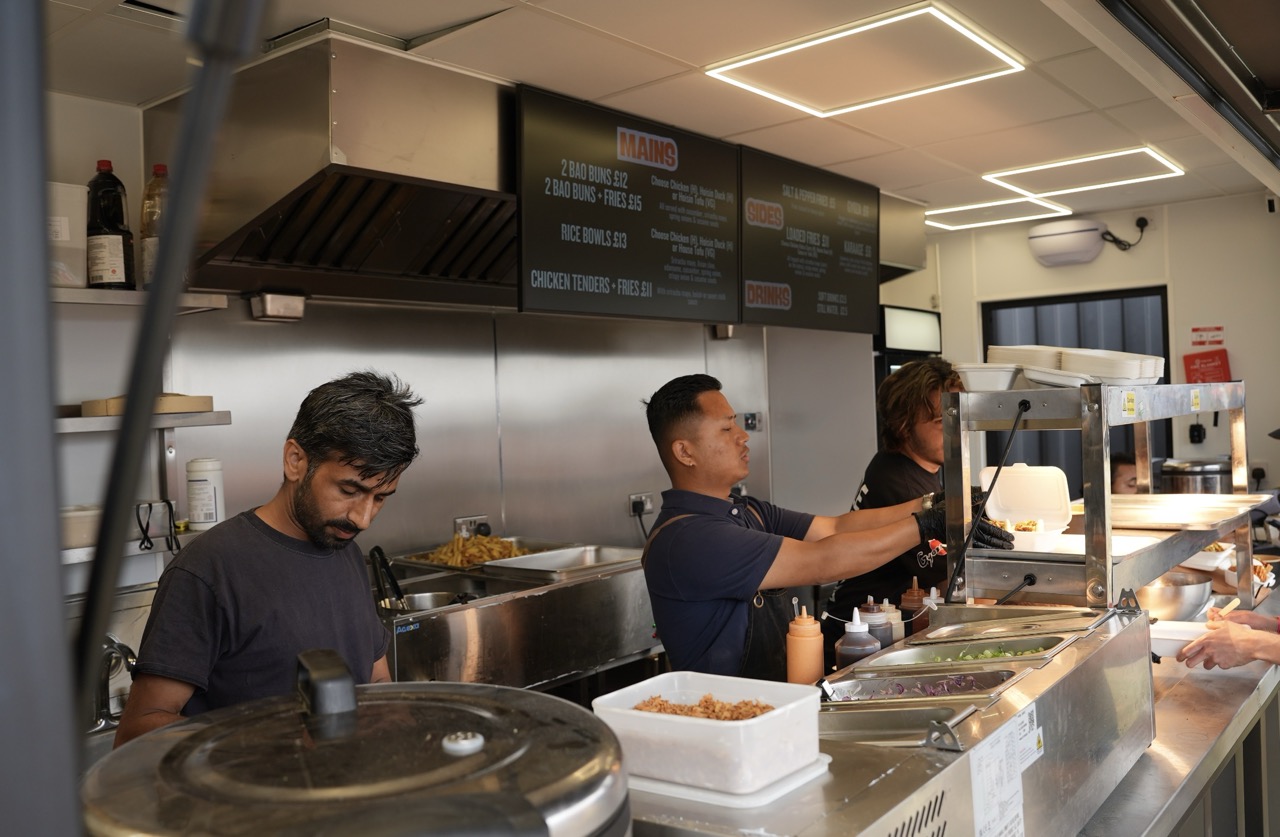
BoxKitchen's units start life as 20ft shipping containers, which is precisely why they hold up where soft structures don't. Fully enclosed steel construction handles UK winter weather as standard, not as an add-on. Every unit comes fitted with 63-amp three-phase power as a baseline, built to run full commercial kitchen or bar equipment without the load-shedding and generator strain that catches out lighter setups on the coldest trading days. Stainless steel fit-out means hygiene standards hold up over a long market run, not just on opening night.
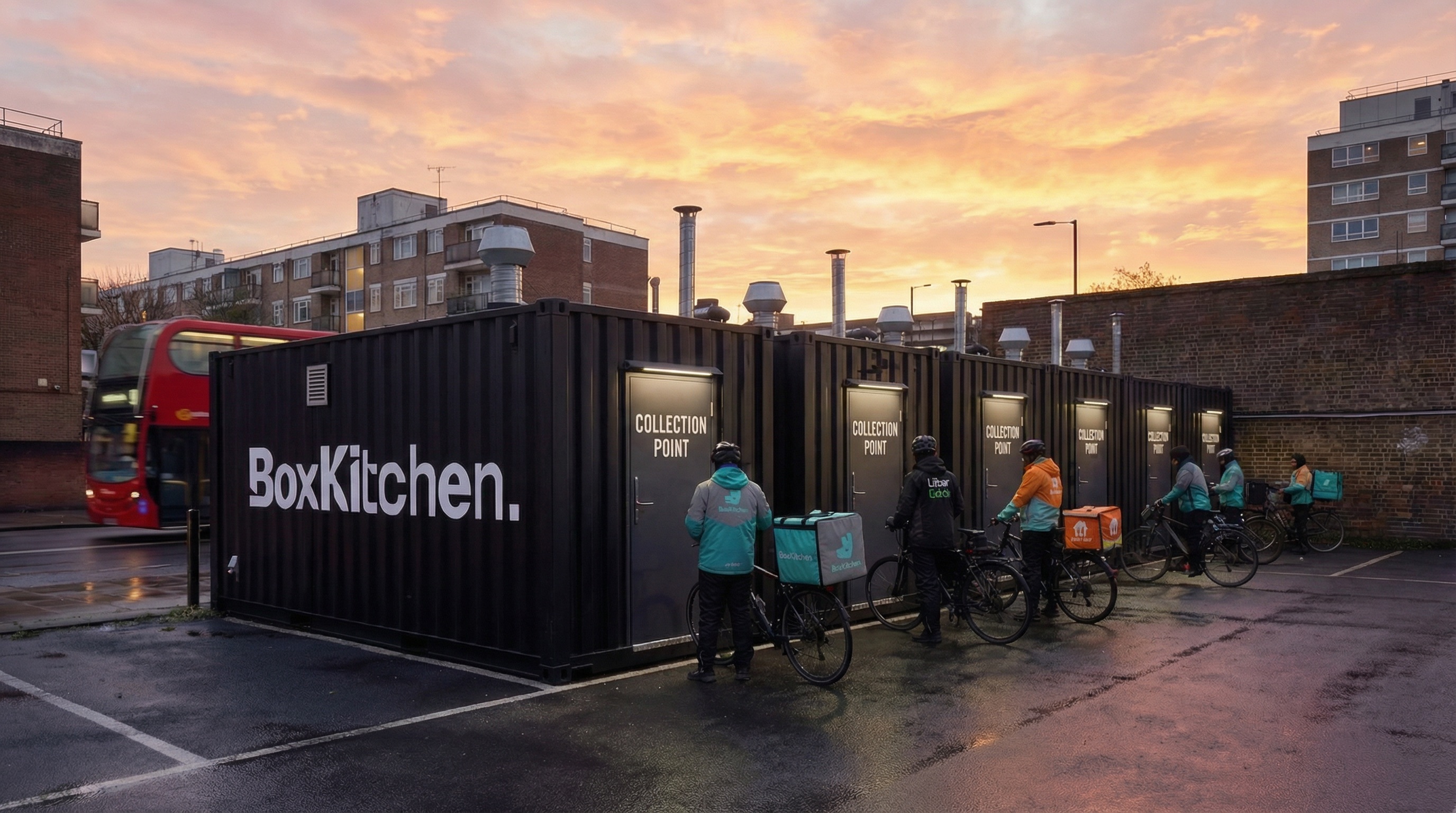
They're plug-and-play by design, delivered nationwide and installed fast, which matters enormously when a Christmas market's entire operating window might be three or four weeks and every trading day counts. And because they're units, not builds, an operator can scale up or down between a single bar for a corporate party and a full multi-unit street food and bar setup for a city-centre winter festival, all on the same rental model from £1,250 per week.
There's a brand upside too. A row of branded, well-lit steel units reads as considered and premium against a field of identical white gazebos, exactly the kind of visual that gives visitors something to photograph and share, which matters given how much winter event spend is now influenced by social visibility rather than just location.
The bar matters as much as the food this time of year
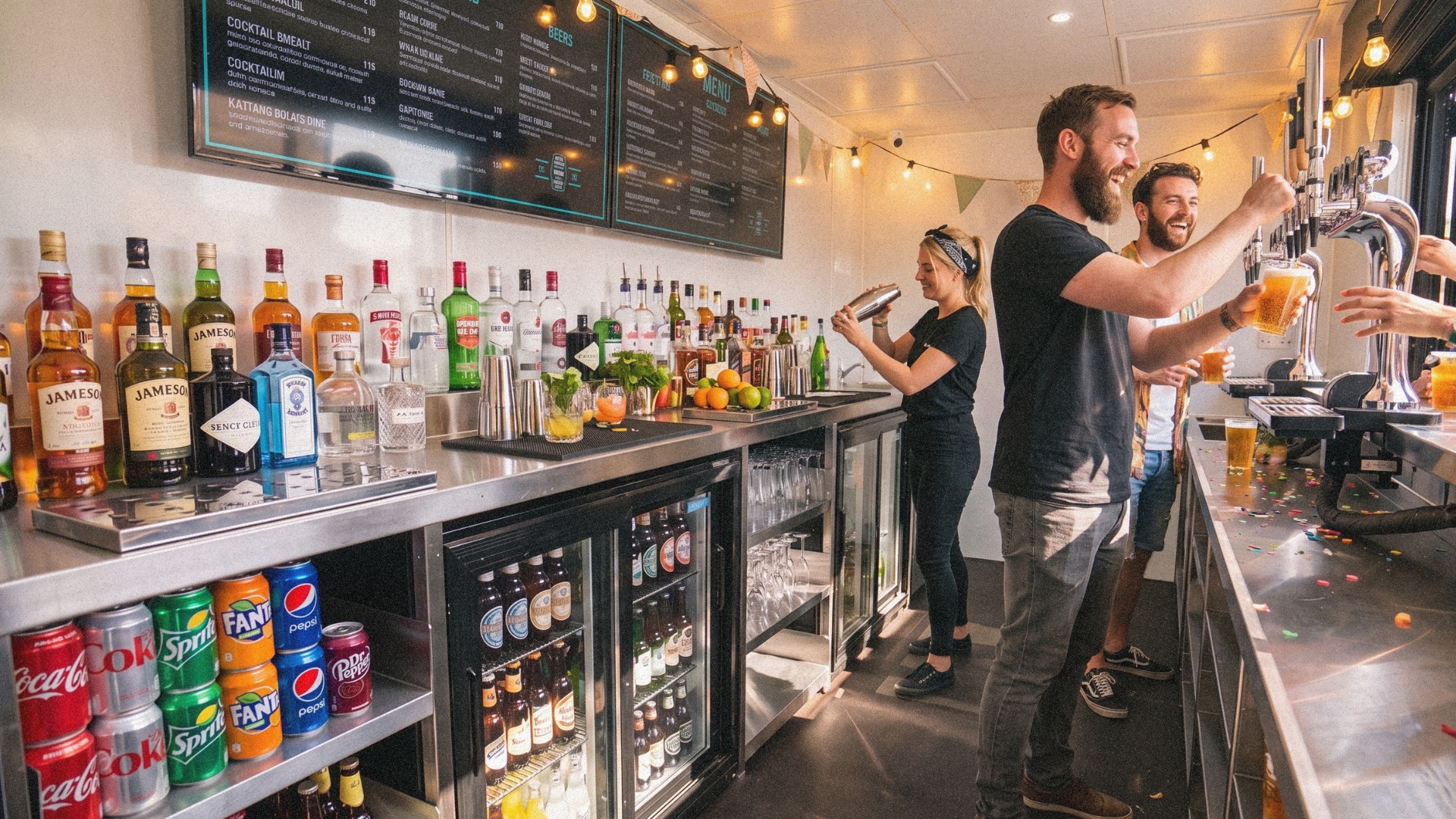
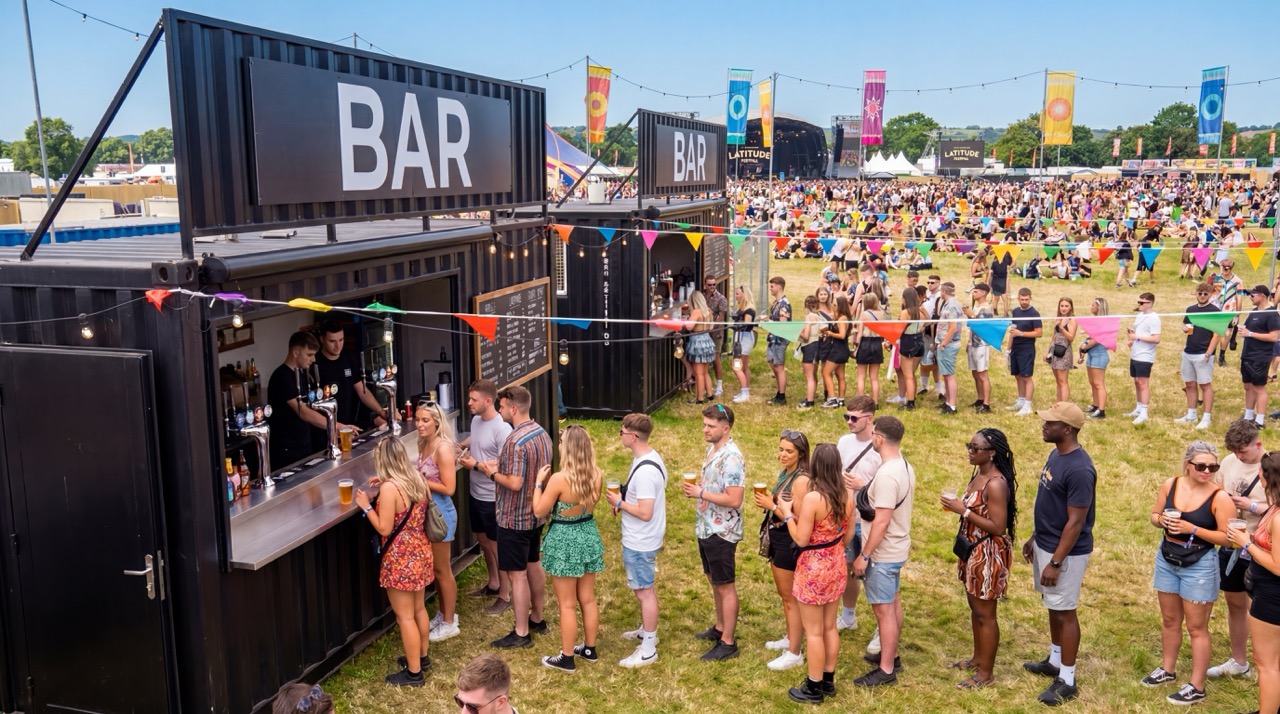
It's worth being direct about something operators sometimes underweight: at winter events, the bar is doing as much commercial heavy lifting as the food. Mulled wine, hot cocktails and premium festive drinks carry strong margins, and with corporate Christmas party spend running well above £150 a head, guests are actively looking to spend on the drinks experience, not just turn up and drink what's poured. A bar unit that can run efficiently, hold stock at the right temperature, and serve fast during a tight two-hour footfall peak is a direct revenue lever, not a supporting act to the food offer.
Proven under pressure at some of the UK's biggest live events
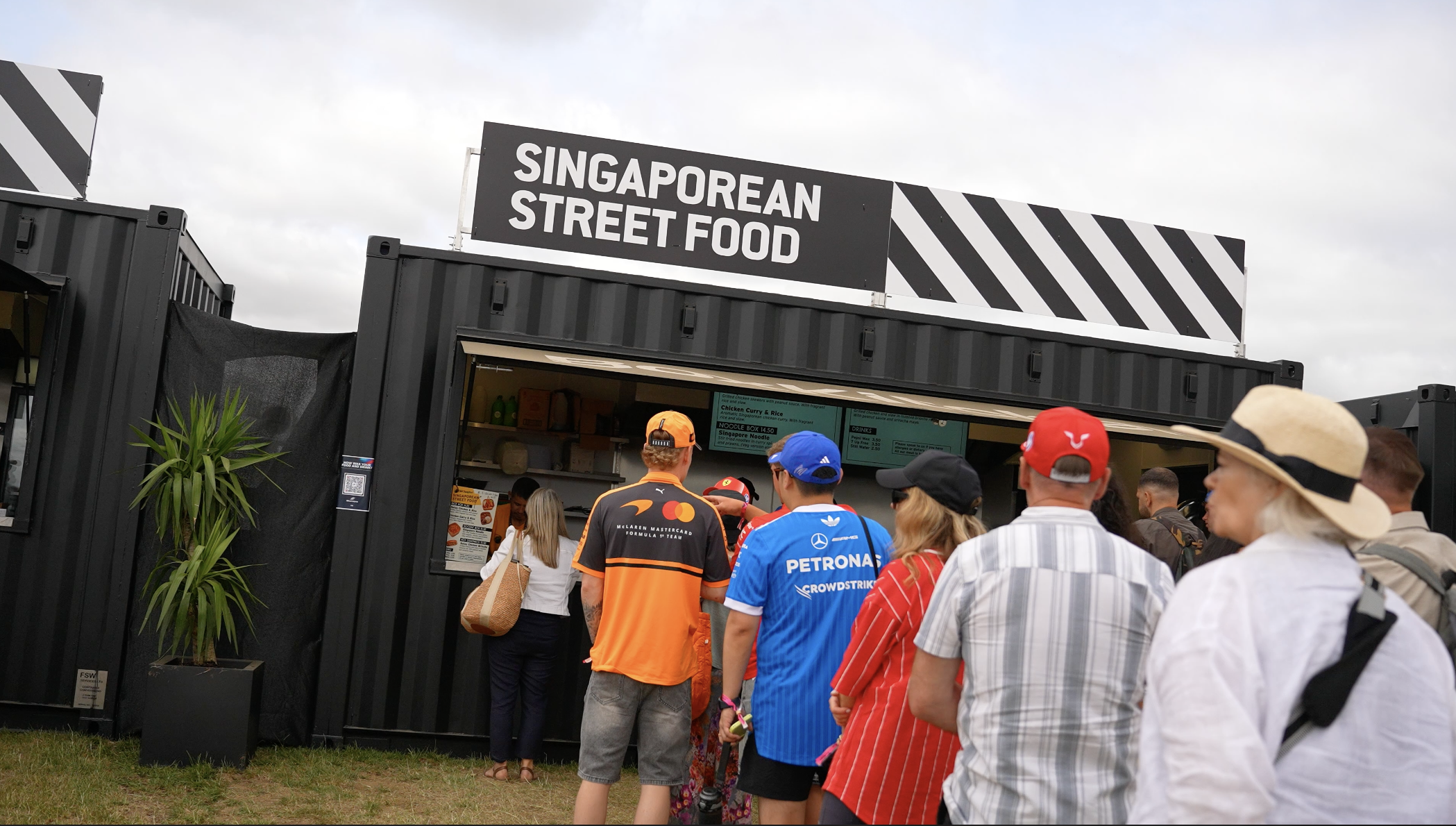
This isn't theoretical. BoxKitchen units have run service at the British Grand Prix at Silverstone, a 565,000-attendee event, at Aintree for the Grand National, and across multiple zones at Vegan Camp Out, in every case delivering high-volume, high-speed food and drink service where downtime simply wasn't an option. That's the same standard of reliability winter events demand, just with worse weather to contend with. Units are used by traders and operators exactly as they would run any other commercial kitchen or bar, serving guests at the event rather than forming a venue in their own right, which keeps setup flexible for whatever format the event needs.
What it actually costs to get this right
Budgeting for winter catering infrastructure doesn't need to be a black box. BoxKitchen rental starts from £1,250 per week per unit, covering a fully fitted commercial kitchen or bar with three-phase power already built in. For an operator weighing that against the cost of a bespoke temporary structure, backup generators, hire heaters and the labour to rig and de-rig all of it inside a short winter load-in window, the maths tends to work out fast, before you even factor in the days of trading saved by a setup that goes up in hours rather than days.
The takeaway for event operators planning this winter
Winter events aren't a smaller version of summer ones. They're a £68.7 billion industry's fastest-growing season, with spend per visitor rising and audiences actively rewarding operators who deliver a proper food and drink experience despite the weather. The infrastructure that worked for a July festival wasn't built for that job. A shipping container kitchen or bar was.
If you're planning a Christmas market, a corporate festive event, a winter fan zone or any outdoor activation between now and January, get in touch with BoxKitchen to talk through unit availability, nationwide delivery and lead times before the busiest weeks of the calendar book out.
Sources: UKEVENTS UK Events Report 2025; Bath & North East Somerset Council Christmas Market 2024 survey; Yorkshire.com visitor economy data; Office Christmas Party Market Report 2025; London Loves Business corporate Christmas spend research; Lumina Intelligence UK Food to Go Market Report 2026.
.svg)



.svg)